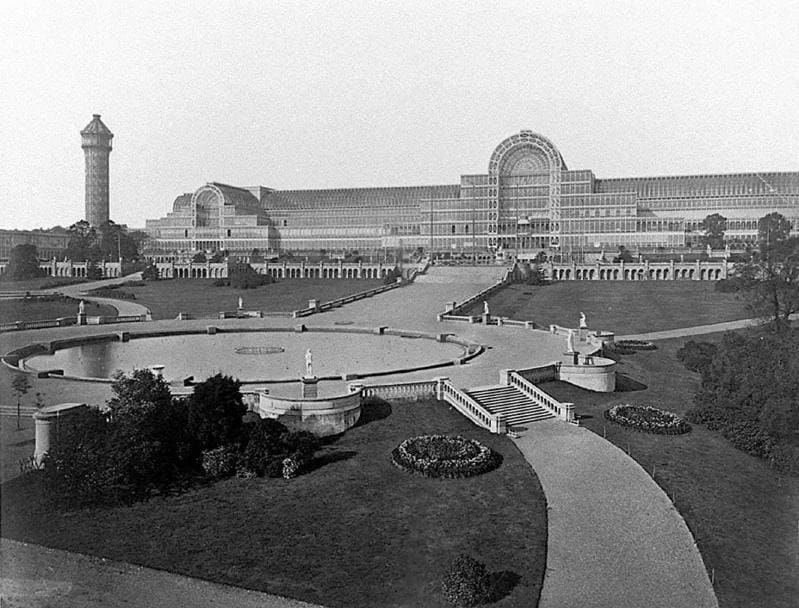
Remembering Joseph Paxton was not a painter or sculptor but a visionary English gardener, architect, and designer. He is best remembered as the creator of the Crystal Palace, the vast glass-and-iron structure built for London’s Great Exhibition of 1851. Paxton’s genius lay in merging horticultural knowledge with architectural innovation; his designs for greenhouses and conservatories revolutionized how light and space could be used to nurture plants and inspire people.
His “art” was the art of glass, iron, and living nature. Paxton treated architecture like a living organism, drawing inspiration from the ribbed structure of giant water lily leaves to design the Crystal Palace’s modular framework.
The Crystal Palace was a massive cast-iron and plate-glass building designed by Sir Joseph Paxton for the Great Exhibition of 1851. Erected in London's Hyde Park, the revolutionary modular structure spanned 1,848 feet long and famously showcased rapid, prefabricated industrial construction before being relocated and later destroyed by fire in 1936