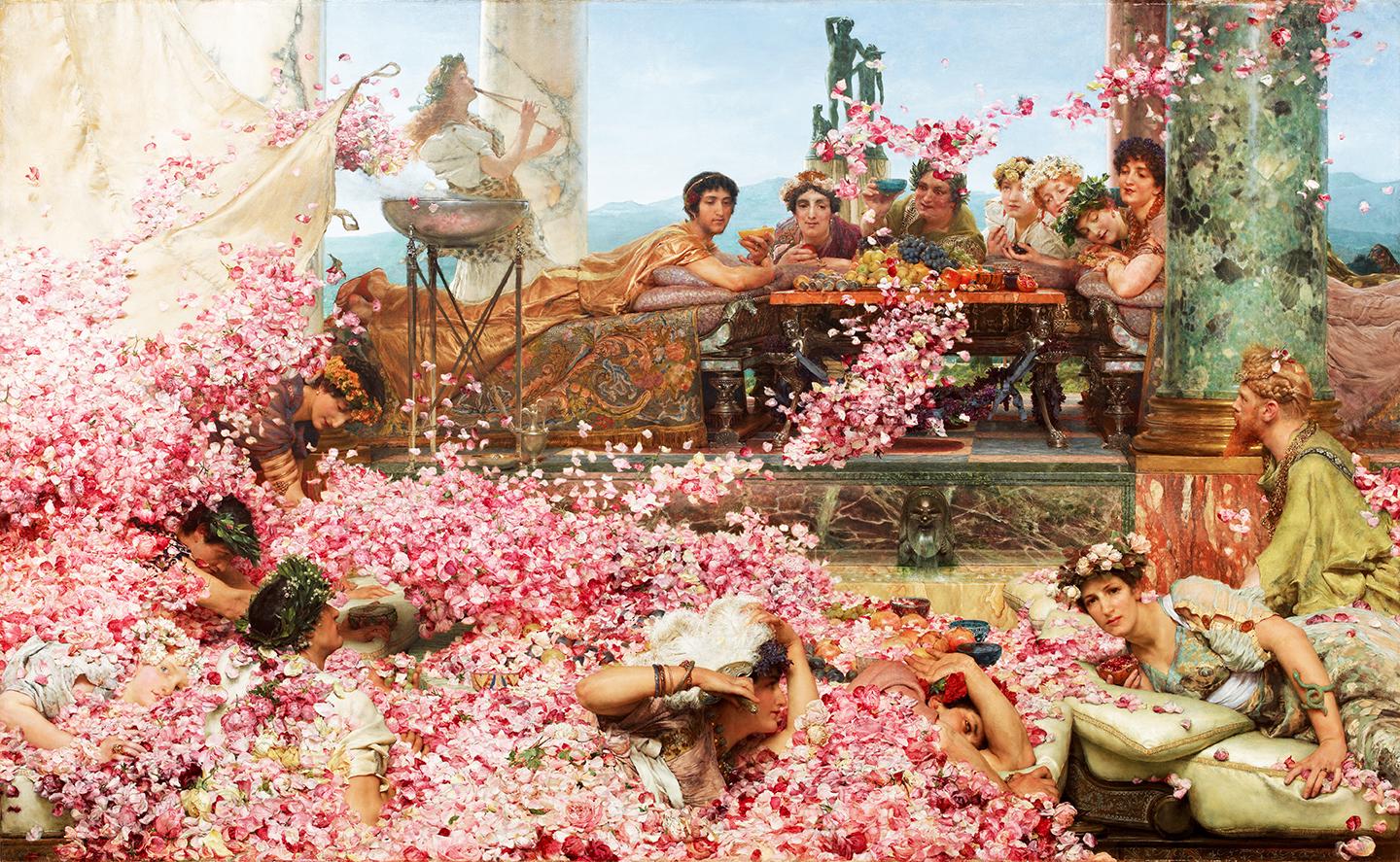
Sir Lawrence Alma-Tadema (1836–1912) was a Dutch-born British painter best known for his highly detailed and luxurious depictions of classical antiquity. Alma-Tadema specialized in scenes inspired by ancient Rome, Greece, and Egypt, meticulously reconstructing architecture, interiors, costumes, and everyday life with archaeological accuracy. His work is especially admired for its luminous light, polished marble surfaces, rich textures, and refined sense of color.
Alma-Tadema’s most popular and iconic painting is The Roses of Heliogabalus (1888). The work depicts a decadent banquet hosted by the Roman emperor Heliogabalus, during which guests are overwhelmed by an extravagant shower of rose petals. The painting has become famous for its opulence, dramatic narrative, and technical brilliance. The delicate rendering of thousands of petals contrasts with the rigid marble architecture, creating a powerful visual and emotional effect.
The Roses of Heliogabalus - Sir Lawrence Alma Tadema